Angelo Policicchio, CPA ·
What Does an Accountant Actually Do All Day?
Everyone thinks it's math. It's mostly not. A field guide to the real workday, from the strip-mall tax office to the 40th floor.
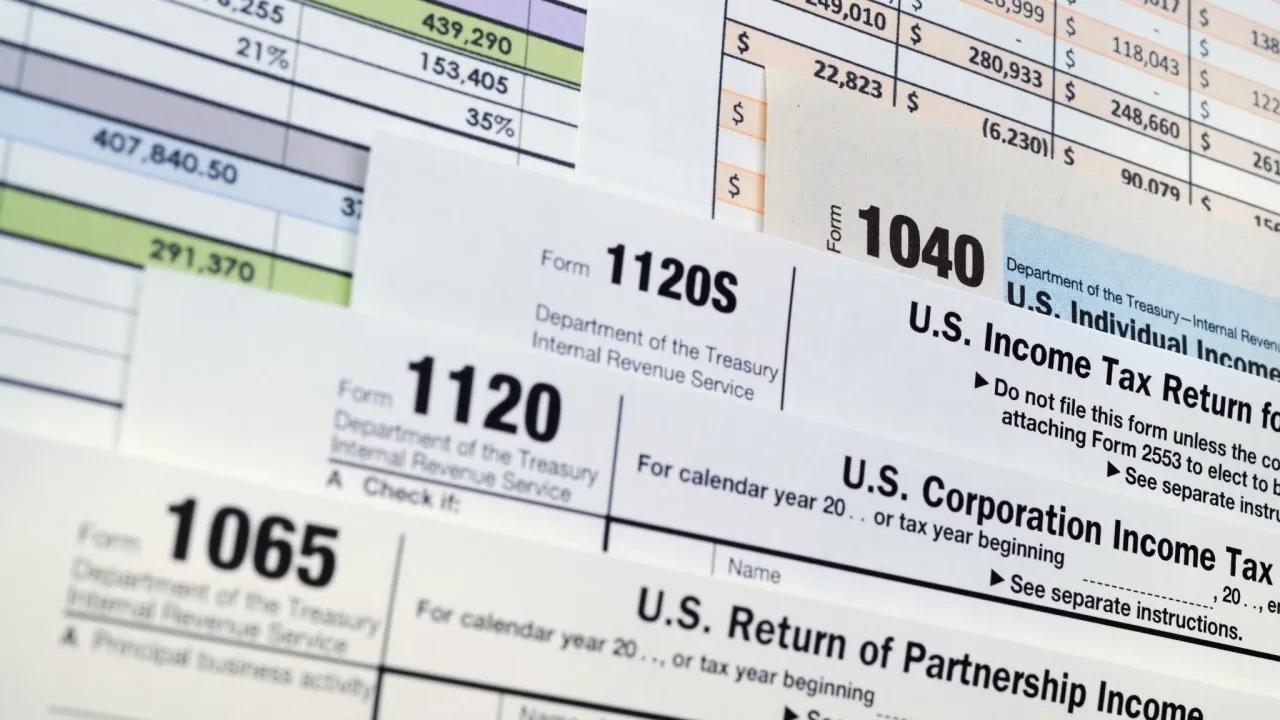
Ask ten people what an accountant does all day and you’ll get some version of the same picture: a calculator, a stack of receipts, and someone who enjoys both. Twenty years of television gave the profession a mascot (the quiet guy in the back office doing arithmetic) and the profession never bothered to correct it. Even accounting students, weeks away from their first job, often can’t describe what that job will actually look like.
So here is the actual workday. There isn’t one accounting job. There are several professions sharing a license, and the license itself recently admitted as much. Since January 2024, the CPA Exam has run on a “Core + Discipline” model, in which every candidate passes the same three core sections and then chooses a concentration: Business Analysis and Reporting, Information Systems and Controls, or Tax Compliance and Planning. (The discipline you pick doesn’t limit the license; every path leads to the same full CPA, audit-signing rights and all. But when a profession redesigns its own entry exam around specializations, it is telling you how far apart these jobs have drifted.) I’ll sketch the rest of the map before we’re done, and a future piece will walk every role in depth. But two ordinary days, one in a strip mall and one on the 40th floor, tell the bulk of the story. Both of them happen in February. (Not a coincidence: February is when this profession shows you what it really is.)
A Tuesday in February at a local tax firm
There are cars in the parking lot before the office opens. Clients show up holding folders, envelopes, and occasionally an actual shoebox. Every document that walks in has to be logged, scanned, and organized before anyone can do anything intelligent with it, and this intake work, unglamorous as it is, determines whether the whole season runs on time.
The scale of this scene is easy to miss from inside it. Paid professionals e-filed nearly 88 million individual returns last year, more than half of everything the IRS received, and most of that volume moves through offices like this one, not towers.
The morning is preparation: pull last year’s return, line it up against this year’s documents, and start noticing what’s missing. That’s the real skill, by the way: not knowing the tax code cold, but noticing absence. The client had a brokerage 1099 last year and none this year. Did they close the account, or did they forget it? The W-2 shows a new employer; where’s the income from the old one through March? You build a missing-items list, and then you spend a startling amount of the day chasing it. Phone calls, emails, voicemails, the follow-up to the follow-up.
The afternoon is the part nobody warns you about: the conversations. At a local firm, you are the family’s financial confessional. The divorce comes up because it has to; filing status changed. The kid’s first job comes up. The small business that almost made it comes up, and you’re the one explaining what the loss means. Tax prep at a local firm is maybe 40% technical work and 60% carefully handling people’s actual lives.
Underneath all of it runs the calendar, which is the true boss of the profession. W-2s and 1099s hit mailboxes by January 31. Partnership and S corporation returns are due March 15. Individuals, April 15. Then quarterly estimates, then the September and October extension deadlines for the returns that couldn’t be finished in spring. A firm preparing 1,200 returns has to move about twenty of them per business day, every day, between late January and mid-April, with no misses, because a miss isn’t a delay. It’s a penalty with a client’s name on it. The job, at its core, is throughput without errors.
And the math? The software does the arithmetic. The accountant does the judgment: whether that side income is a business or a hobby, whether the home office actually qualifies, what the client didn’t think to mention.
A Tuesday in February at a Big Four firm
Walk into any Big Four office in busy season and you’ll find the audit team not in the office at all. They’re in a conference room at the client’s headquarters, and they’ve been there since early January. Four firms (Deloitte, PwC, EY, and KPMG) employ a combined workforce north of 1.5 million people and collect 99.7% of the S&P 500’s audit fees. In February, a remarkable share of that empire is sitting in borrowed conference rooms exactly like this one.
A first-year staff auditor’s day orbits around a document called the PBC list (“prepared by client”), the running inventory of everything the team has requested and is still waiting on. The work itself is tying: taking a number on the financial statements, tracing it back to the schedule that supports it, tracing that to the invoices and bank statements and contracts underneath, and documenting every step so a reviewer can follow your path. There is a discipline hiding inside the tedium: the workpaper has to stand alone. Years from now, the PCAOB, the audit profession’s own regulator, can pull that exact file in an inspection, and it has to answer every question with you long gone from the engagement. Audit isn’t checking math. It’s manufacturing evidence, built to survive people who are paid to distrust it. Then the review notes come back (from the senior, who answers to the manager, who answers to the partner who signs the opinion) and you clear them, one by one.
It sounds tedious, and parts of it are. It is also, quietly, one of the best business educations available anywhere: you learn how money actually moves through a company by physically tracing it. By the end of your second busy season you’ve seen how revenue gets recognized, how inventory gets counted, how things get hidden, and how they get found. Investment banks teach you to model a company. Audit teaches you to open one up.
The hours are the hours. In season, dinner at your desk (or at the client’s conference table) is standard, and 55-to-70-hour weeks are normal. Anyone who tells you otherwise is recruiting you.
The rest of the map
Those two Tuesdays are the poles of public accounting: the client-serving side of the profession, which runs from the Big Four down through regional firms to the storefront shop, and splits mostly into audit, tax, and advisory. But the license opens more doors than two.
Corporate accounting is where most public accountants eventually land: the controller’s office inside a company, running the month-end close, the reporting, the budgets and forecasts. Industry has its own caricature, the “easy exit,” and it’s just as wrong. The close is its own February, and it happens twelve times a year. Government runs on accountants too: the IRS and state revenue departments on one side of the table, the GAO and state auditors keeping score on the other, and forensic accountants at the FBI and the Department of Justice following money through fraud cases. Then the specialty rooms: valuation, transaction advisory (the due-diligence teams behind every acquisition), internal audit, nonprofit and fund accounting, each with its own rhythm and its own version of busy season.
Every one of those deserves more than a sentence, and every one will get it. A future piece in this series will walk the full map: what each role actually does all day, what it pays, what it’s a launchpad for, and who it fits.
The parts nobody tells you
The first is that most of the day, in every version of this job, is getting information rather than computing it. Email, document requests, follow-ups, reconciling the version the client sent Tuesday against the version they sent Thursday. Excel is the instrument. Judgment is the sliver at the top of the day, but it’s the sliver clients actually pay for, and the whole apprenticeship is about earning your way up to it.
The second is that burnout in this profession isn’t really about difficulty. It’s about compression. The work of a year gets crushed into ten weeks by statutory deadlines that don’t negotiate, and that compression, not the tax code, is what drives the exits covered in the first piece of this series.
The third is the part where I’ll editorialize: the mascot isn’t just wrong, it’s expensive. The profession has been automating its own arithmetic since VisiCalc shipped in 1979, and it kept advertising arithmetic anyway, selling hardest the one part of the job that died first and saying almost nothing about the actual product: judgment under deadline. Compression explains the people who leave. Advertising arithmetic helps explain the ones who never show up. You can’t fix a pipeline by raising salaries alone; at some point you have to describe the job.
The fourth is that the off-season exists, and it’s where the interesting work lives: the extensions, the planning conversations, the cleanup projects, the actual thinking. The public sees April 15. The profession is built in July.
And the last is why people stay, which never makes the recruiting brochure. A good CPA at a local firm sees the inner financials of hundreds of businesses and families. By thirty, you’ve read more P&Ls than most executives see in a career, and you’ve developed something close to pattern recognition about how money behaves: what kills small businesses, what quietly builds wealth, which decisions echo for a decade. Business owners make maybe three phone calls before every major decision of their lives. If you do this job well, you’re one of them.
That’s the day. Not a calculator in sight.
This is the second in a series on the accounting profession: where it came from, what’s changing, and what it looks like from the inside. Read the first piece here.